Introduction to Mocking GUI
Mocking GUI is a GUI tool optimized for HTTP-based API mocking.
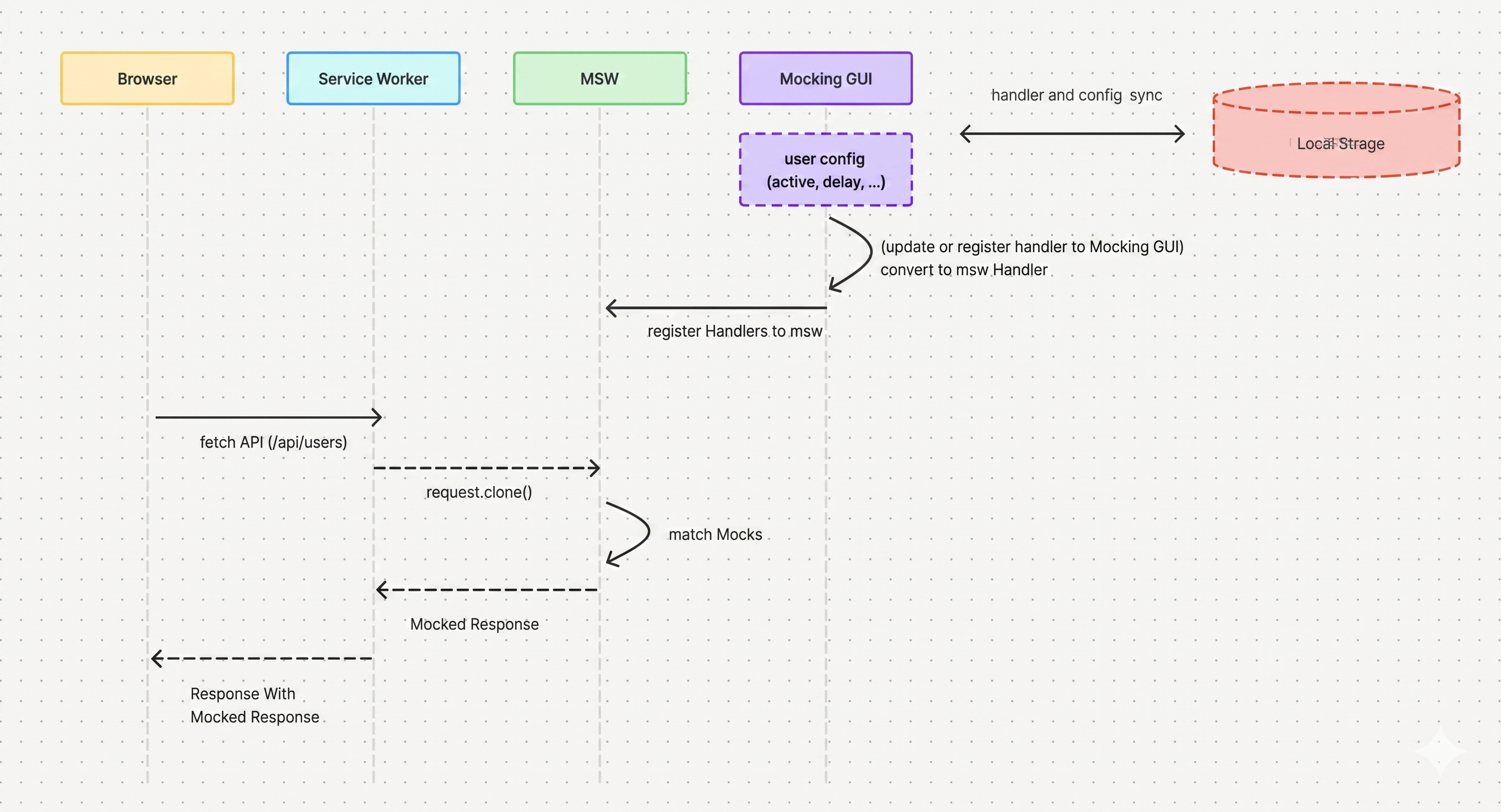
The library is built on MSW 2.x's http namespace and supports mocking for the following types of HTTP requests/responses:
- HTTP requests generated by
fetch,XMLHttpRequest, etc. - HTTP methods such as
GET,POST,PUT,PATCH,DELETE, etc.
Through its control panel, you can manipulate API responses in real-time and easily verify various test scenarios without changing code.
Why Mocking GUI?
MSW is an excellent library, but managing handlers purely through code can be cumbersome. To make a specific API return an error or add delay, you often have to modify code and refresh the page.
Mocking GUI solves these problems:
- GUI-First: Change API states (Success/Error/Loading) instantly from the panel with a single click, without code changes.
- Enhanced Collaboration: Save complex bug reproduction steps as "Scenarios" and share them with your team.
- Easy Setup: Provides an instant mocking environment with minimal configuration and supports mock state synchronization between browser and server.
Key Features
- Powerful Control Panel: Control handler activation, mode (Auto/Manual/Swagger), response variants, and delays instantly from the GUI.
- Server Synchronization: Cookie-based state synchronization ensures consistent mocking behavior across CSR, Next.js (SSR/RSC), Remix, and other server-side rendering environments.
- Swagger/OpenAPI Automation: Load Swagger documents to instantly create a mock server and control responses without writing code.
- Scenario Management: Save complex API state combinations (e.g., No User + Payment Failed) as a single "Scenario" to restore and share with one click.
- Style Isolation: Uses Shadow DOM to provide a safe overlay without conflicting with your application's CSS.
Getting Started
Ready to introduce Mocking GUI to your project?
👉 Installation & Setup Guide - Get started in 3 minutes with detailed installation instructions and framework integration examples.
For advanced usage:
- Swagger Automation - Connect your existing API docs for instant mock generation
- Usage Guides - Learn about handlers, scenarios, and advanced features